




- 收藏
- 加入书签
基于“语言协同”,立足原文研析
 打开文本图片集
摘要:在读后续写过程中,学生要深度分析原文语言特征,续写语言应沿袭原文语言风格,才能达到语言协同,本文基于语言协同的角度,尝试在阅读环节对原文进行研析,以便更好助力续写环节。
关键词:原文 语言特征 语言协同
王初明教授提出:“内容要创造,语言要模仿,创造与模仿要紧密结合”。创造性的模仿就是在深度学习的基础上融会贯通,加以创造性的发挥。当然,“文如其人”,同个话题,不同的作者,会写出语言风格迥异的文章。学生在续写时,要揣摩吸收和模仿原文语言表达,才能在输入和输出中形成拉平效应,从而做到续文与原文情景融洽度高,衔接自然,语言风格一致。本文以广东2024届普通高中毕业班第二次调研考试读后续写原文为例,尝试在阅读环节对原文进行研析。
原文如下:
It was a typical Monday morning for Jenny,a diligent high school senior. The sound of her
alarm clock woke her up,a rude awakening from her sweet dreams. She unwillingly opened her eyes,knowing what waited for her-another 5 long days at school.
Dragging herself out of bed,Jenny went through her usual morning routine. She hurriedly
got dressed,grabbed her backpack,and rushed to the kitchen for breakfast. Her mother had prepared a nutritious meal,but Jenny had no appetite. She was too occupied with thoughts of an upcoming exam in her most challenging subject,mathematics.
As Jenny walked to school,her mind wandered back to the countless hours she had spent studying and practicing equations(方程式).She had put in lots of effort,hoping to improve her grades. However,despite her dedication,she was struggling to achieve the desired results. Doubts started crawling in,and anxiety stayed in her mind like dark clouds.
As students settled into their seats,Mr. Johnson,their math teacher,announced that the exam would take place that afternoon. Jenny started to feel afraid. She suddenly realized that she had forgotten her calculator at home,an essential tool for the exam. Panic turned into hopelessness,as she knew that borrowing one during the test would be strictly prohibited.
Jenny's friends,Emma and David,noticed her worry and approached her after class. They offered their help. Emma suggested that Jenny be honest to Mr. Johnson and explain her situation. David,however,had a different plan. He proposed sneaking(偷偷给)his calculator to her during the exam,risking punishment for cheating.
一.语言形式
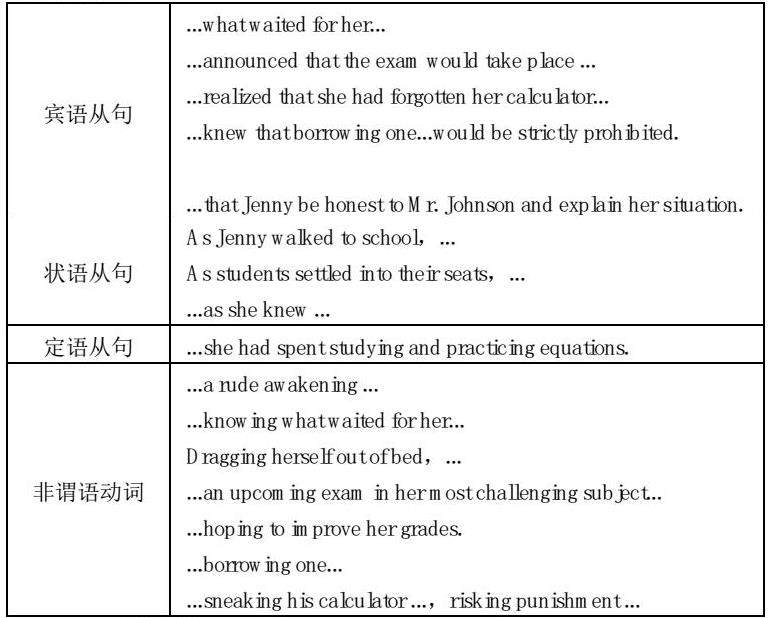
原文语言形式相对简单,共5段话,264词,19个句子。简单句14个,复合句5个。其中5个宾语从句,3个状语从句,1个定语从句,6个同位语,非谓语动词、形容词和副词多处使用,排比句,拟人,比喻等修辞手法的自如运用,都可以看出作者对语言表达的驾驭能力,不愧是二语习得的精选素材。
二.语言风格
1.细描的妙用
描写是使叙述形象化的一种写作方法,细描就是运用较多的修饰词语,对描写对象进行较细致的描写。描写可分为人物描写和环境描写。人物描写就是描写人物的肖像,语言,动作,情绪变化,心理活动等。通过这些描写,可以使文章中的人物形象丰满,跃然纸上。环境描写包括生活场景描写与自然景物描写。这类描写还能用来衬托文章中的人物形象,渲染气氛,抒发作者的感情。描写要善于抓住描写对象的独特之处,多方面地表现其特征,引起读者的共鸣,充分传递人物的精神和思想内涵。原文通过Jenny 日常上学前的细节描写,给我们展示了一个勤奋的高中生,因数学是软肋而倍感焦虑,觉得每周的上学的日子很漫长。
(原文中下划线的句子就是对情感和心理活动的细节描写。)
2.修辞手法的灵活运用
拟人+比喻:Doubts started crawling in,and anxiety stayed in her mind like dark clouds.
排比:She hurriedly got dressed,grabbed her backpack,and rushed to the kitchen for breakfast. 排比是把内容紧密关联,结构相同或相似,语气一致的几个句子或短语接连说出来。这三个动作短语连续使用,一气呵成,形成一串连贯的动作,将Jenny早上上学那种不情愿而又不得不匆忙赶时间的状态,表现得淋漓尽致,具有画面感。这些修辞手法可以使表达更加生动,有力,鲜明,能够引起读者的共鸣和思考,提高表达效果。
3.形容词的灵动运用
形容词在原文中出现了不只10处,值得一提的是,恰当的选用形容词描述人物和描绘故事场景,会增强细节描写的灵动性,文笔细腻的细节刻画,通常能让读者身临其境。
小结
在阅读环节,研习原文语言特色,聚焦语言协同效应,增强语言效果,才能更好地提高我们续文和原文的融洽度和连贯性,使到全文行云流水,无缝接合,契合度高。
参考文献:
[1]王初明 互动协同与外语教学 [J].外语教学与研究(外国语文双月刊),2010(7).
[2]王文伟 基于互动协同效应的读后续写契合点探究教学实践[J].英语学习·教师版2019(6)

 京公网安备 11011302003690号